 CodexWork
A yellow table, three oranges and a boat drawn badly three times. That is the centre of this small book. The walk to the far pier never happens.
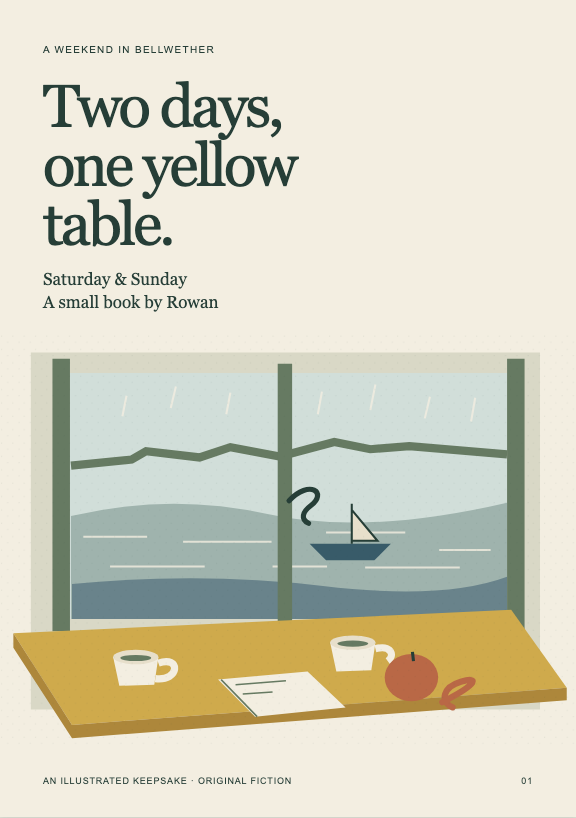
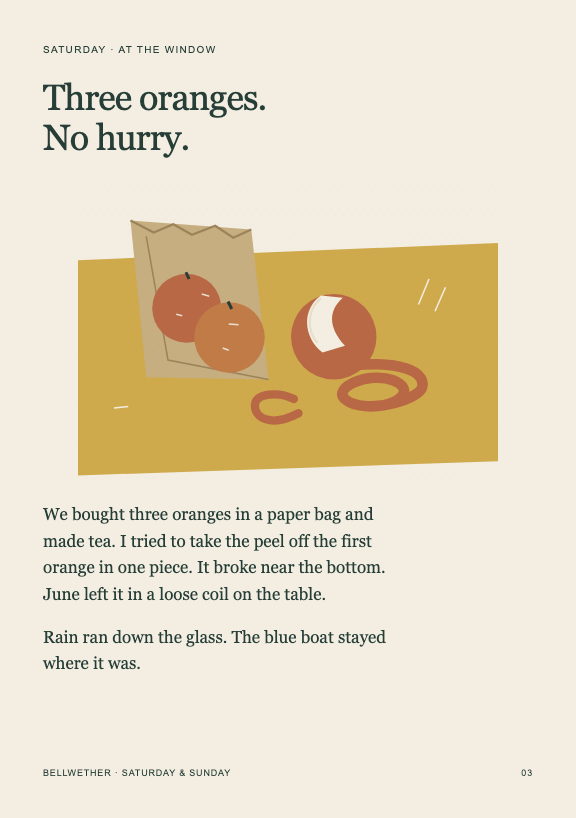
“Two days, one yellow table” follows Rowan and June through one night in Bellwether, an invented coastal village. The notes, people and place are original fiction, written for this example. The pictures are original illustrations, not photographs of a trip.
The finished book opens as a single file. Read it on a phone, print the six A5 pages, or save a copy and change the words. There is no account to create and nothing to upload here.
Keep the printable PDF · Download the editable book
The table, not the itinerary
The source notes contain a bus ride, a room, rain, tea, oranges, two walks along the same quay and a journey home. A day-by-day summary could account for all of it and still miss the point of the book.
The yellow table gives the details somewhere to gather. First it is a place to put down the bags. Then it holds the broken orange peel and the drawing that June thinks “might float.” On Sunday, the harbour changes colour beyond the same window. The last page keeps the stained receipt and the unused orange, rather than trying to manufacture a grand ending.
That is the creative choice: make room for a few things to recur. The boat drawings are slightly funny. The cup rings are barely an event. They belong in the book because they belong to this particular weekend.
A different book for the person who was there
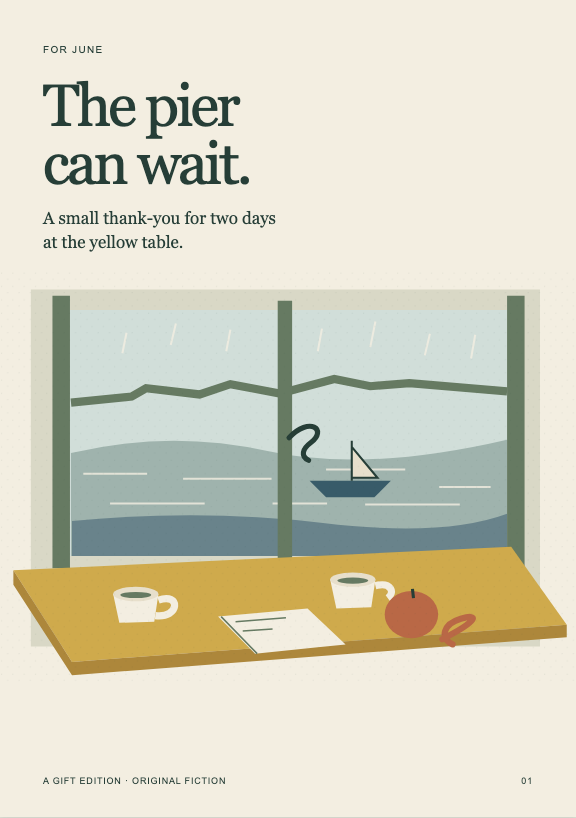
Open the three-page gift edition · Keep its printable PDF
“The pier can wait” uses the same notes, but Rowan now addresses June. It drops most of the journey and the inventory of things brought home. The drawing joke stays. So does June’s line about coming back when it rains.
This is more than a shorter layout. The first book helps Rowan remember; the second thanks June. No new encounter, quotation or shared history was added to make that change feel warmer.
Bring your own small details
For your version, bring five to ten rough notes: what you did, something someone actually said, a small mishap, an object you noticed. Fragments are fine. Mark anything you are unsure about. Add a few photographs you took or have permission to use, or make an illustrated book without them.
Also say who the book is for. A record for yourself can linger over an ordinary morning. A gift for a friend may only need the part you both remember.
To make your own:
- Choose the reference that fits your purpose: the personal keepsake or the short gift edition. Choose “Save editable copy” to download its HTML file, and save the short making brief as a text file too. If you came to thank someone, start with the gift. There is no first book to finish beforehand.
- Start a conversation with your own AI that can create files. Attach the reference HTML and brief, together with your own notes and any photographs you have chosen to share.
- Tell it who your book is for and ask it to follow the brief using your material, not the fictional memories. Check the returned book before printing or sharing. Another edition is optional, only if it serves a different recipient or purpose.
The exact fictional notes are included so you can compare the source with both finished editions before trying it.
Your photographs would replace the illustrations inside your own copy. Ask your AI to embed them in that file, rather than link to an online album. CodexWork does not receive them through this example; anything you share with your chosen AI is handled by that service.
For a wording change here, choose “Edit the words,” then “Save editable copy.” Reopen the downloaded file to check it. For a new story or longer passages, let your AI adjust the layout too. Before printing, check the page breaks. Before sharing, check the details and the people in the pictures.
If the person receiving your book just needs to read it, use “Print / save PDF” and inspect every exported page. Send that PDF rather than asking them to open an editable HTML file on their phone. Keep the HTML for your own later changes.