 CodexWork
You know a little about photography. Could you turn that into a good hour with other people? Look twice gives the host a plan and everyone else a card to take outside. No presentation needed.
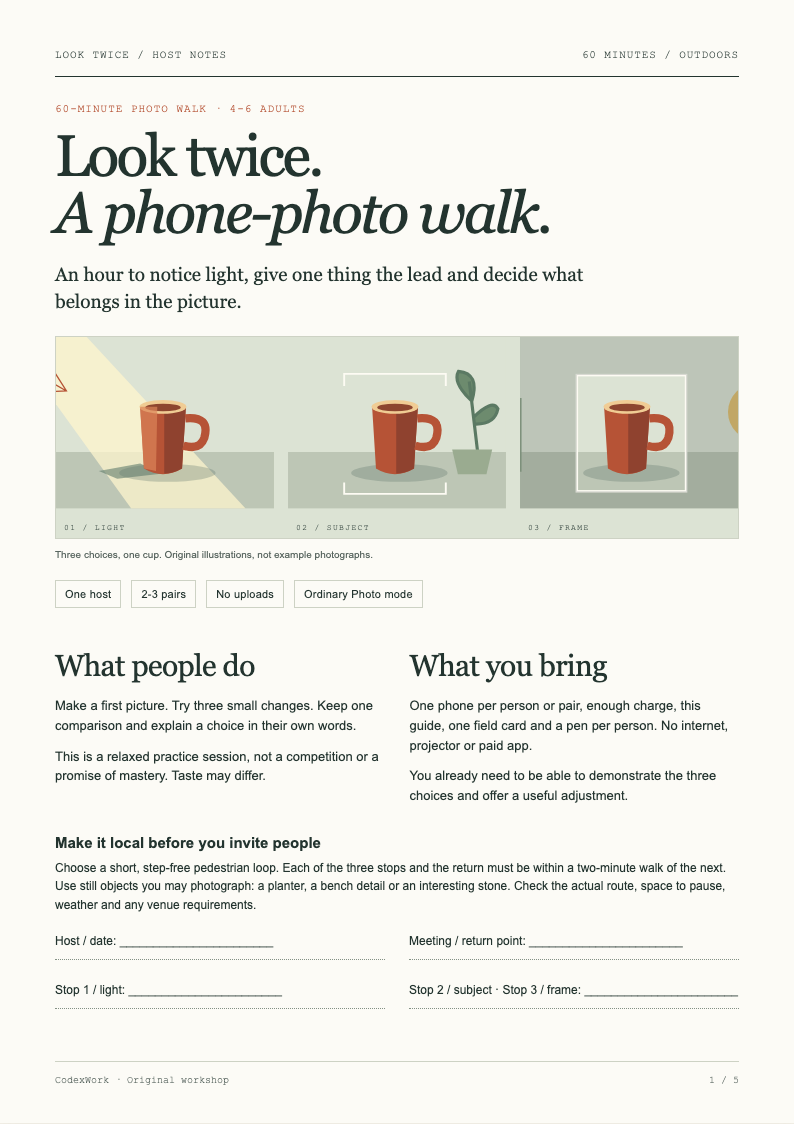
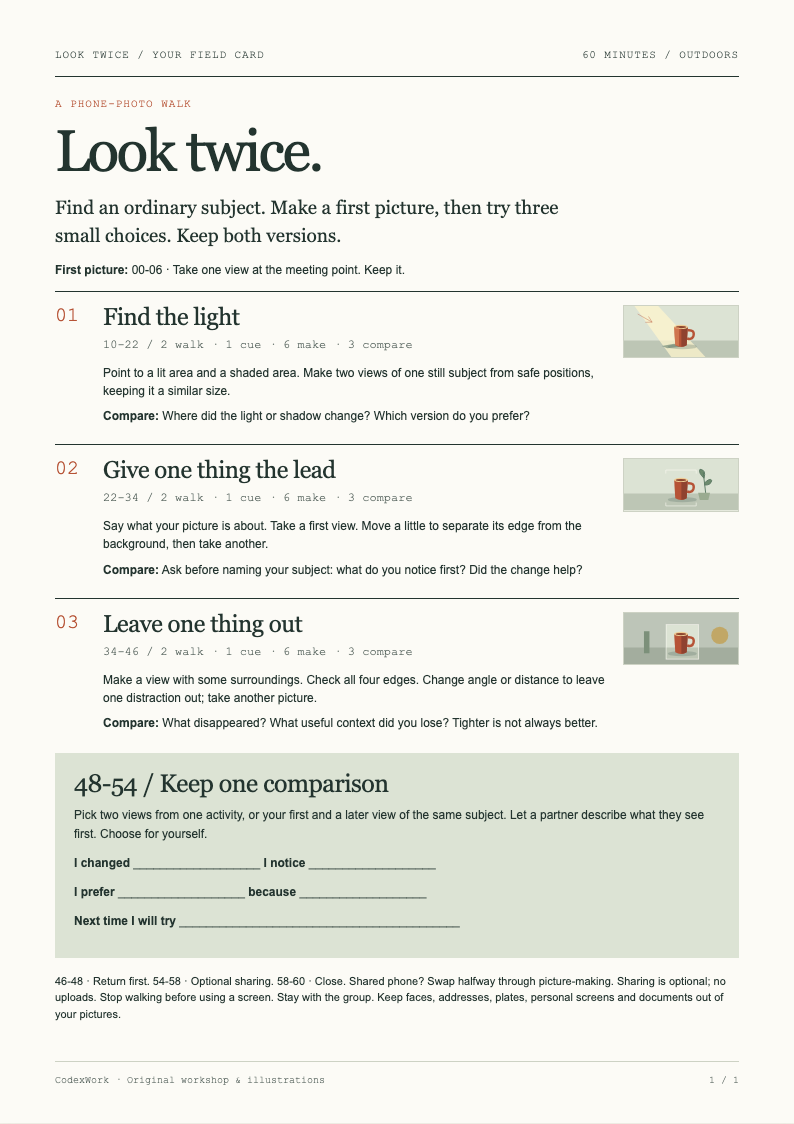
The finished session gives people three things to try. Make two views of a subject and notice the light. Move to give one thing the lead. Then leave a distraction outside the frame and decide whether the picture lost anything worth keeping. At the end, each person chooses a pair of pictures and explains a decision. Nobody needs to publish an image or win a critique.
Open the 60-minute host guide · Take the one-page field card
Print the host guide · Print the field card · See both editions together
Rain changes the workshop, not just its heading
The original hour includes three short walks, time to explore and a return to the meeting point. The revision has thirty minutes, a room and no outdoor option. Simply halving each block would leave people hurrying between exercises.
The indoor edition replaces the route with one tabletop still life per pair. A window or a safely placed desk lamp supplies the light; plain paper gives the background somewhere quiet to go. The host checks that each pair can see a useful light difference before anyone arrives. Three five-minute activities lead into seven minutes of comparison. The handout changes with the plan, so nobody is still being sent to an outdoor stop.
Open the 30-minute indoor guide · Take the indoor activity card
Your subject might be something else
You might know how to mend a seam, identify a few local birds or organise a family archive. Start with the part you can actually demonstrate, not a broad course title. Bring your own notes, an example you may share, the audience, time and available materials to the AI you already use. Decide what participants should practise and what is outside your competence.
Download the editable example card and short making brief. Attach them to your file-capable AI along with your notes. Say which parts of the example you want to borrow and which subject is yours. The original starting notes show exactly what this commission supplied.
A short instruction is enough to begin:
“Use my notes to make a workshop for these people, in this place and time. Give me a timed host plan, a one-page activity card. Keep my teaching meaning. Flag missing knowledge and practical decisions rather than making them up.”
If a real constraint changes, ask for a revised plan and card together. Then try the demonstration with the real materials and a clock. The AI can help arrange explanations, activities and files. It cannot lend you subject knowledge you do not have, inspect your room from a description or know that people learned something because a handout looks good.
Look twice is an original authored example, not a record of a class or a test of a named AI product. Its drawings are illustrations. The useful thing to borrow is the finished shape: something people can do, a host who can help, and a revision that still works when the afternoon changes.